

Dubai offers one of the widest ranges of cars and prices anywhere, from budget runabouts to the most exclusive supercars. Getting a feel for where prices sit across the main segments helps you set a realistic budget and recognise a fair deal when you see one.
This overview maps the landscape by segment and explains what pushes prices up and down, while stressing that you should always check current listings for live figures.
Economy and small cars
At the affordable end, compact and economy cars offer the lowest entry prices, especially used. These cars prioritise efficiency, low running costs and easy servicing, making them the natural choice for budget-conscious buyers and first-time owners.
The used market here is especially active, and patient buyers can find strong value in well-kept examples.
Family cars and SUVs
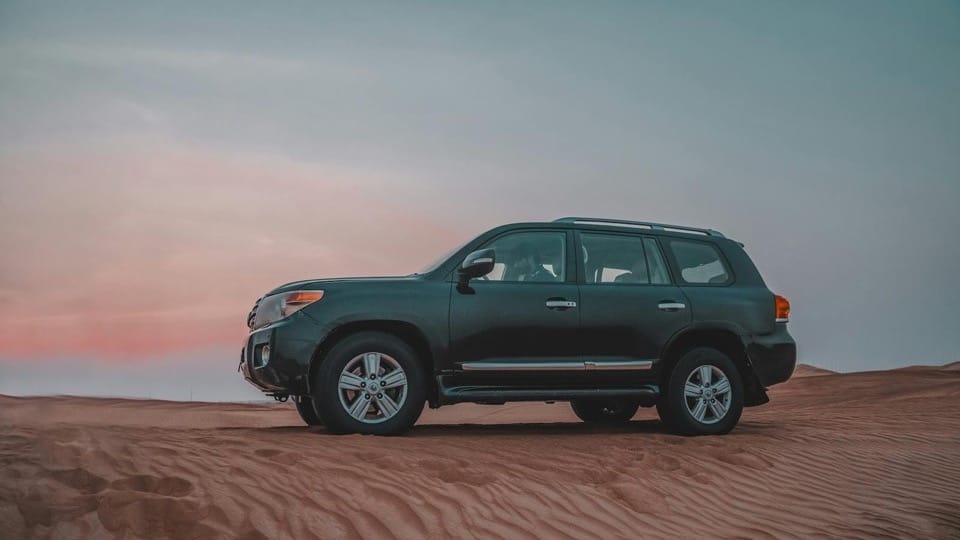
Mid-range family sedans and SUVs occupy the broad middle of the market. SUVs are particularly popular in Dubai for their space, presence and suitability to local roads, and they command a premium over equivalent sedans.
Prices vary widely with size, brand and specification, so define your real needs before assuming you require the largest option.
Luxury and premium cars
Dubai has an unusually deep luxury market, and premium German and other prestige brands are everywhere. New, they carry high prices; used, they depreciate sharply, which can make a few-year-old luxury car surprisingly attainable.
The catch is running and repair costs, which stay high regardless of the lower purchase price – a crucial consideration covered elsewhere in our guides.
Electric vehicles
Electric cars are a growing segment in Dubai, spanning affordable models to premium performance EVs. Purchase prices vary, but lower running costs and charging incentives can improve the long-term picture.

As the segment matures and used EVs appear, value options are increasingly available for buyers willing to consider electric.
What moves prices up and down
Prices respond to brand desirability, specification, age, mileage, condition, GCC versus imported origin, and overall market demand. A well-documented, GCC-spec car in clean condition commands more; an import with patchy history commands less.
Understanding these levers helps you judge whether any given price is fair for the specific car.
How to use price information
Because the market moves, treat any general price guidance as a starting point and confirm with current, comparable listings before you buy or sell. Search the exact make, model, year, trim and mileage to see what is actually changing hands now.
Live, comparable data is always more reliable than a remembered figure, and it is the foundation of every good deal.
What drives car prices in Dubai
Car prices in Dubai reflect a mix of global supply, local demand, currency stability and the unusually transient population that keeps a steady flow of used cars on the market. New-car pricing is influenced by manufacturer strategy and dealer competition, while used prices respond to depreciation curves, mileage and specification.
Because the dirham is stable and the market is competitive, prices tend to be predictable for mainstream models. The biggest swings appear in luxury and enthusiast segments, where rapid depreciation makes used examples comparatively affordable against their original cost.
Reading prices across segments
Expect different dynamics by category:
- Mainstream Japanese and Korean cars: stable, predictable pricing.
- Luxury and German marques: steep depreciation, strong used value.
- Large SUVs: durable demand, firmer resale.
- Electric and hybrid: evolving prices as supply and interest grow.
- Older budget cars: wide variation driven by condition.
Knowing which pattern your target car follows helps you judge whether a given price is genuinely good or merely average.
Using price knowledge when you buy or sell
Whether buying or selling, anchor to real, current listings rather than to old memories or hopeful figures. Pull several comparable examples of the same make, model, year and mileage, and remember that advertised prices sit above actual selling prices by the usual negotiation margin.
Treat any price far outside the cluster with suspicion. A bargain that seems too good usually carries a hidden cost in condition or history, while an overpriced listing simply sits unsold. The market clusters around fair value for a reason.
Turning price knowledge into a good deal
Understanding what drives prices is only useful if it changes how you act, and the discipline is the same whether you are buying or selling. Anchor every decision to a cluster of genuinely comparable, current listings, the same make, model, year, trim and mileage, and remember that advertised prices sit above actual selling prices by the usual negotiation margin. A price far outside that cluster is a signal to investigate, not to celebrate.
For buyers, this means treating a suspiciously cheap car as a question rather than a bargain, because an unusually low price almost always reflects condition, history or specification issues that erase the apparent saving. For sellers, it means pricing into the realistic market rather than to memories of the purchase price or the loan balance, since an overpriced car simply sits unsold while it continues to depreciate.
Use the broader pattern by segment to calibrate your expectations: stable, predictable pricing on mainstream Japanese and Korean models, steep depreciation but strong used value on luxury marques, and evolving prices on electric and hybrid cars as supply grows. Knowing which pattern your target follows helps you judge whether a given price is genuinely good, fair, or simply optimistic, and that judgement is what converts market knowledge into money saved or earned.
Frequently Asked Questions
How much does a car cost in Dubai in 2026?
It spans a very wide range – from affordable economy cars to luxury and electric models. Price depends on segment, brand, specification, age and condition, so check current comparable listings.
Why are used luxury cars sometimes affordable in Dubai?
Luxury cars depreciate sharply, so a few-year-old example can be surprisingly attainable to buy – though running and repair costs stay high regardless.
What factors most affect a car's price?
Brand, specification, age, mileage, condition, GCC versus imported origin, and market demand. A clean, well-documented GCC-spec car commands more than a patchy import.
How should I use general price guidance?
As a starting point only. Always confirm with current listings for the exact make, model, year, trim and mileage, since the market moves and figures date quickly.
Ready to buy or sell your car in Dubai? Start at Dubai Car Zone for trusted listings and expert guidance.